Thunder Force V ~ Steel Of Destiny [Fate Mix]
for YM2612 + SN76489
by MetallicOrwell
And so the fateful time has come at last. When I did Rising Blue Lightning a couple of months ago, I did say eventually I would do Steel Of Destiny--my favorite piece of music from any video game ever for over fifteen years now. In fact, there is evidence on my hard drive that I attempted this song as early as September of 2025, and it was a good thing I gave up on it, because when I compare that attempt to what I've accomplished here, it's almost laughable. I'd like to think I was self-aware enough to realize I wasn't ready yet to do it justice like I wanted. Fast-forward until roughly two months ago, and my FM synthesis and sequencing skills have improved massively, but still: I knew I needed to be able to compose better. A simple cover absolutely would not do, and none of Saitama Saisyu Heiki's versions are nearly ambitious enough to use as a base. I had ideas, and I needed to improve my compositional abilities to bring them to fruition. Sure, I have been able to compose lovely original pieces (The Metallic Maiden is absolutely nuts). But again, it hasn't been that long since I started doing expansions and originals--am I ready now, truly? Ready or not, I felt the time was right, so I went for it. Perhaps it really is destiny.
.jpg)
Like I said, S.S.H.'s version is not the best take on Steel Of Destiny, which is quite shocking. It's faster, it's got some solos, and that's about it--he didn't even do the chorus again in a higher key. For some reason, my GOAT VGM song just didn't inspire him like Venus Fire and Metal Squad did. To be completely fair to Senpai here, you can't go too hard on this one without making it unrecognizable, because it's got a very specific mood--a kind of tragic heroism mixed with badassery--and you have to preserve *that* while adding to it, because otherwise it's not Steel Of Destiny anymore. He really screwed the pooch when he did his first take on Rising Blue Lightning: good instrumental power metal, but kills the essence of the original.
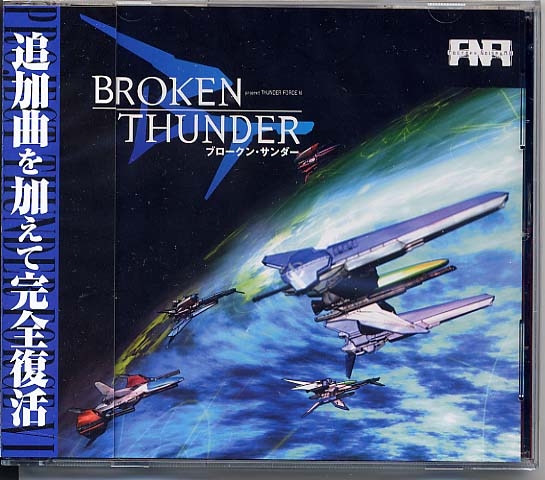
So I looked elsewhere for inspiration, and I found it on the Broken Thunder album. Here's a quick VGM lore lesson: Thunder Force VI was being developed for the Sega Dreamcast, with Hyakutaro Tsukumo handling musical duties, just like in Thunder Force V. Tecnosoft went bankrupt and the project was canceled, but fortunately the music was released on a CD called "Broken Thunder" a few years later, along with a few remixes / arrangements of various Thunder Force pieces. There are two new takes on Steel Of Destiny. One of them is called "Cry Sky", and is a mellow, strings and piano kind of thing. The other one is called "Take Off", and it's similar to the original, but with higher quality instruments (?) as well as an expanded section in a higher key with guitar solos. They are placed in the album right next to each other, and they flow together quite nicely. If you've listened to my "Steel Of Destiny [Fate Mix]" before reading this, you can see where this is going.
Reflecting on the different approaches that artists often take when remixing / arranging other people's music, I was able to narrow them down to two. I'm excluding straight-up covers here, of course.
1.- The expansion approach. This is where you make essentially a cover of the original piece, and then add more to it, usually at the end. MaestroDraven is extremely good at this, as his whole Revenge Of Shinobi project shows: make it faithful at first, then add your own stuff that still feels coherent and respectful of the original.
2.- The reimagining approach. This is best exemplified by S.S.H.'s versions of Venus Fire and Metal Squad, which I've covered before, and especially his "Bloody Tears Again" piece. They are still identifiable, but they take massive liberties with the structure, the extra flavor, etcetera, to the point where they could almost be considered their own independent thing.
What distinguishes these two approaches is whether you think of the original song as something to build upon, or something to be reimagined as something else from the ground up. What I've done with Steel Of Destiny is firmly rooted in the first approach. I think it works tremendously well, but part of me does wonder if the reason I didn't go with the second option is that my musical abilities are not on that level yet. At the same time, though, the essence of the piece itself can nudge you in one of the two directions, and also, it depends on your instincts. Case in point: once I was done with the orchestral intro, I started to metalize the absolute fuck out of Steel Of Destiny right away, and stopped myself because I realized I wanted to show respect to Hyakutaro Tsukumo's genius, and not turn my favorite VGM track ever into some deranged tech-death metal demo.
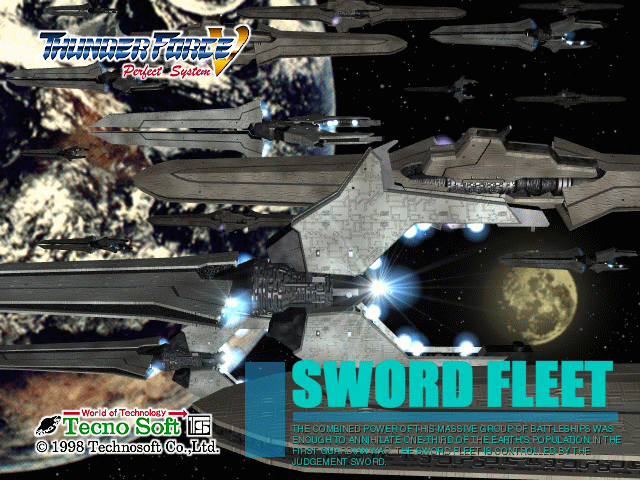
I'm getting ahead of myself, of course. Let's dissect "Steel Of Destiny [Fate Mix]" section by section. As always with these things, I composed the extra parts on FL Studio first and then copied the notes manually to Furnace, where I finalized the piece.
First off, there is the orchestral intro, which again, is inspired by Tsukumo's "Cry Sky" version, but is otherwise quite different in execution. There is a fade-in with some strings / choir chords and a simplified version of one of the melodies in 3/4. The YM2612's ladder effect gives it an interesting flavor; it's almost like the distortion at low volumes makes it sound more tense. There is a diminished chord, and then we move on to the song's main melodies, and we switch to 4/4 for the rest of the piece (mostly... there are some speed jumps here and there). The melodies are played on various piano instruments, all of them modifications of the electric piano from YU-NO (PC-98, OPNA) to avoid shrillness at high octaves. The chords are mostly minor ones, as Steel Of Destiny is primarily in D minor aeolian, although of course there's some chromatic stuff here and there to make my life a bit more difficult, because why not? I think I did use a major chord in some places, however.
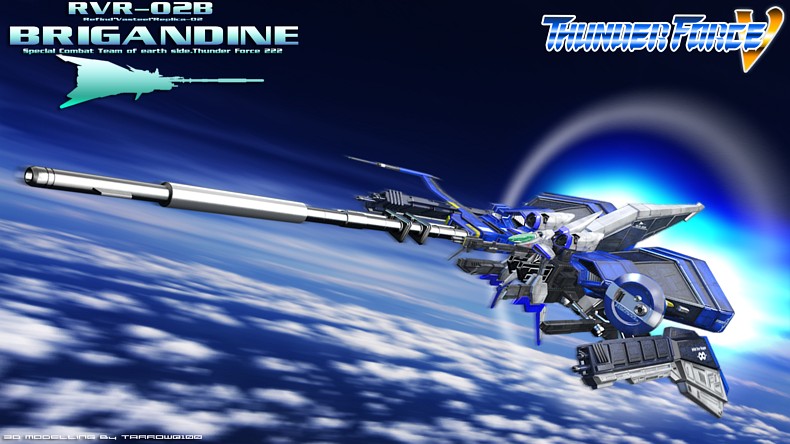
Finally, for the chorus, I switched it up from piano to a choir. The strings are mine, of course, and the choir is a modified version of the one from Master Of Monsters (by Hitoshi Sakimoto). There is also a bass to enhance the lower end of the mix, as well as to accent some parts; it's a fingered bass instrument I pilfered from a SilverRIFF .fur file. Throughout the different sections the square waves provide extra flavor, sometimes by playing arpeggios (not by using an arpeggio macro or effect, but real musical arpeggios), and sometimes by providing additional backing melodies. I think this orchestral intro has a flavor all my own, rather than sounding the same as Tsukumo's "Cry Sky" version, and that's probably a good thing.
The next part is where the song proper begins, and it's extremely faithful to the 1997 original--in fact, I extracted the sound of the stick count from the actual original song just to give it that extra touch of authenticity. It uses my battle-tested metal formula: FM 1 for chunky bass, FM 2 and 3 for panned rhythm guitars, FM 4 and 5 for leads, FM 6 for PCM drums (all from the Arachno soundfont power kit), square waves for support, and noise channel for hi-hats and crash cymbal backup. Now, Steel Of Destiny isn't a pure heavy metal song. It's got a metal backbone to it, with rhythm guitar, bass, and drums, but it's also very layered with strings, rock organ, orchestra hits and what have you. Obviously some of it has to go, because the Mega Drive's YM2612 + SN76489 combo simply doesn't have enough channels for such dense polyphony. I could've used extended channel 3 mode, but I decided not to, because I would've been sacrificing modulation for more notes. In heavy metal, thickness of sound trumps polyphony.
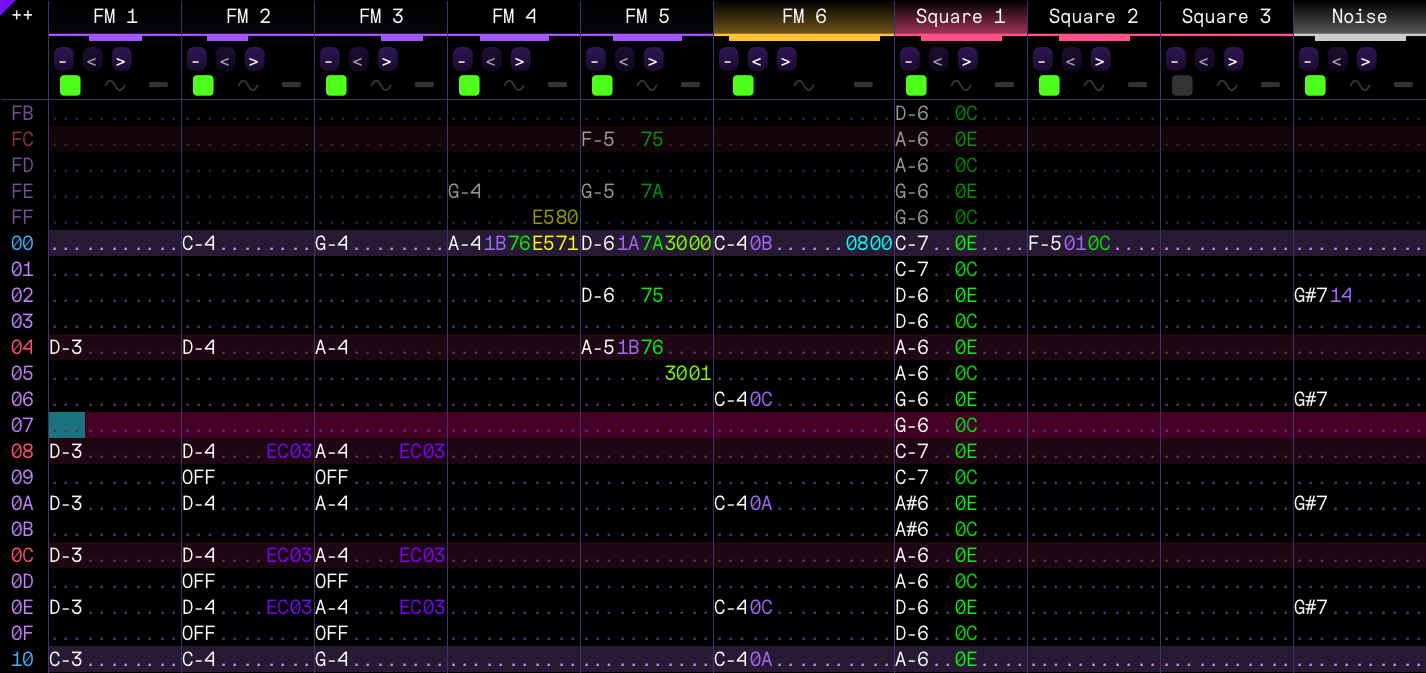
So, channels FM 4 and 5 take turns handling different instruments. In one part, they both use my custom Orwell Strings V.2, playing the same notes at two octaves, but in specific moments, FM 5 changes into orchestra hits momentarily, and you barely notice. When the verses start, I use an instrument I like to call "MO's DoctorSolo", which is quite similar to the synth lead sound used by Tsukumo, on FM 4, while FM 5 handles detuned echoes for thickness. The square waves usually handle the high-pitched crystal-like instrument as well as the echo when there aren't any free FM channels, which is most of the time. Again, I put emphasis on the mood, not just heaviness, and that means making room for a string ensemble on the YM2612 if necessary. During the chorus, I use my trusty "trumpet synth" and I harmonize it with one of the square wave channels, which sounds fantastic. In this particular section, there is absolutely no room left for echoes, so it might stand out to you if you have a fine ear.
And then we have the extended section. The guitar riffs and drum patterns are more complex and percussive, and of course the lead guitar makes its appearance and stays for a while. The solos are similar in style to what I've done before, with pitch slides and harmonized sections Iron Maiden style, but now we also have some repeated two-string arpeggios. I shit you not, I actually studied some guitar tabs for Tornado Of Souls by Megadeth to see how Marty Friedman did it, and then applied it to Steel Of Destiny (on the Mega Drive). This whole thing might, in fact, be completely deranged and ridiculous now that I think about it. Well, self-awareness can't last forever, so let's carry on nerding the fuck out.
In the middle of this section there's the key change, from D minor to E minor. That's two steps up, exactly the same jump that happens in Tsukumo's "Take Off" arrangement--it's faithful to his vision and it works. During the bridge, we have a keyboard solo (trumpet synth again), and then we have the final chorus. The first "loop" is the same as the first except for the whole higher key thing, but in the next one the melodies are played on twin guitar leads, and the riffs and drums are, again, more complex. Then, there is a third part with a fully harmonized guitar solo that no two human guitarists could possibly play accurately. Well, maybe they could after many rehearsals.
There are a few callbacks, a big rock ending, and after almost seven minutes, Steel Of Destiny [Fate Mix] finally ends. But this dissertation doesn't, because there's a big question hanging in the air: have I done justice to my favorite video game song ever? Yes--I do believe this is a brilliant take on the song, certainly the best chiptune version ever. Could I have done an even better job? With my current abilities, maybe not. If I had approached this project with the "reimagining approach" I mentioned earlier, this might have turned out more like S.S.H.'s Venus Fire or Bloody Tears Again, but like I said, I'm a fledgling musician with less than a year of real experience, so I don't think I'm capable of doing something like that yet.
There's a sense of accomplishment (I do think I've done a great job) but also a sense of uneasiness, like there's still untapped potential in Steel Of Destiny I haven't been able to fully realize. Are the standards I'm setting for myself here too high? Do I expect too much from MetallicOrwell, considering he just published his first original piece less than two months ago? Maybe.
This is a strange way to end a write-up of mine--usually they're 100% triumphant. And when I listen back to Steel Of Destiny [Fate Mix], I do think it sounds incredible. It's a crystallization of everything I've learned so far: the orchestral intro shows my mellow side, the sound design of the heavy metal section is impeccable, the guitar solos are good, and the overall structure escalates in a fantastic way: mellow intro, faithful part, extended, more intense part in a higher key, and then the ending.
I suppose that's it then. One last thought: even S.S.H. did two different versions of Metal Squad, and the second one is far more impressive than the first in many ways. Yeah, let's end this thing with that thought hanging in the air.
See you around.
Back to the index