Herzog Zwei ~ The Mournful War
for YM2612 + SN76489
by MetallicOrwell
Well, that sure came out of nowhere. Usually when I decide to start a project it'll be something I've been mulling over on and off, but occasionally it's like a bolt of lightning strikes me and I'm helpless to resist the electricity that pulls me in this or that other direction. I can't control what happens here, folks. Still, not every project has to be an original piece or massive expansion that takes me weeks to complete--sometimes you just want to make a simple cover, damn it. Enough about my self-mythologizing ass--let's talk about Herzog Zwei's music and Tecnosoft more broadly. That's pretty damn interesting.
Welcome back to VGM history class! Today's subject, Tomomi Ootani, is a very obscure musician. He was Tecnosoft's main music guy during their early Mega Drive era: he scored Thunder Force II (X68000 and MD), Herzog Zwei and parts of Thunder Force III--and that's all the music he ever did for videogames. He had bills to pay and composing music became less of a priority, so he disappeared from the scene, only briefly resurfacing in 2022 with a new original track. Anyhow, his early style is very distinctive, and you'll never get him confused with anyone else. It's a combination of two things: first, he doesn't really go for energizing, catchy melodies--in fact, I would describe most of his music as sounding constantly tense, without any kind of release. The second element: a complete disregard for realism when designing FM instruments, except for bass and drums--those have to be identifiable for the music to make any sense at all. Otherwise, he makes everything as "synth-y" as possible. As a result of these two things, his pieces can sound abrasive, and I'd go as far as to say that I find some of the music from Thunder Force II flat-out annoying.
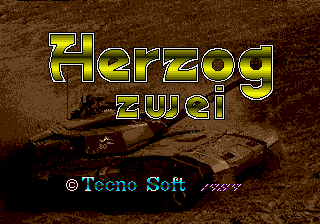
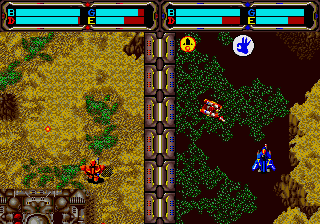
Herzog Zwei is a much better OST, and I do think this is primarily because most of the tracks were originally composed by Naosuke Arai for the first Herzog game on the MSX2, and then arranged by Ootani for the Mega Drive. That being said, while Ootani's original compositions for this game do still sound tense, now they have more of a mood, and the melodies aren't just strange and confusing. The Mournful War is my favorite piece he ever did, and I do consider it one of the best on the console, which is why I decided to cover it here.
As the title implies, The Mournful War conveys a mood quite fitting for a videogame about people dying on the battlefield--it's not a happy thing. It's quite interesting that even at this early stage in the development of video games (1989), composers were taking their job seriously and with the appropriate amount of gravitas. It's a fast piece (almost 180bpm), and it combines tenseness with melancholy, so it's perfect for a scene where people are fighting and dying, later to be mourned by their spouses and children or something. Now, Herzog Zwei is an early game for the Mega Drive, and many games from this era did not use sampled drums, or indeed any samples at all. Sometimes it was because ROM size was tight (typically 512kb), but sometimes they just didn't know how to program a sound driver that could play PCM samples without muting the FM channels. In the case of Technosoft, it was the latter, as evidenced by Thunder Force IV being a 1992 release that still couldn't play samples worth a damn.
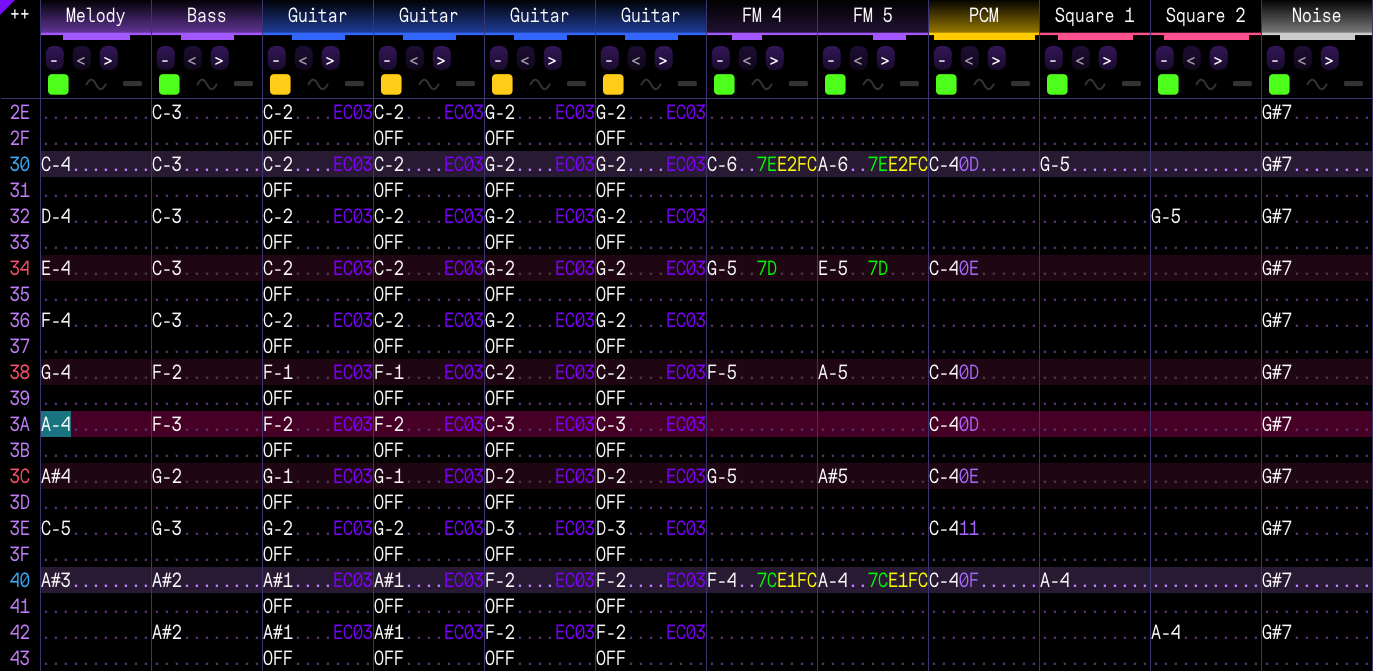
The way Ootani designed the sound here is interesting. He's using two FM channels for percussion, and when I realized that I knew there was no way I'd do the same thing, because I'm not sacrificing any melodic voices if I can help it. So, the drums in my cover are handled by channel FM 6 of the YM2612 playing mainly samples (Arachno Soundfont + SSH snare) and the noise channel of the SN76489. Because the PSG is mono, some of the stereo effects on the percussion are lost, but I'll happily pay that price to get as much melodic thickness as I can.
Moving on, he's got a bass guitar, one channel for the main melody, two for chords (or counterpoint, depending on what's appropriate), and then two square waves for backup. Again, the sounds he uses are extremely synth-y and almost impossible to liken to anything that resembles a "real" instrument, so I took liberties. I based this on the project file for my previous cover of The Cold Shade Of Night, so the FM instruments are the same, just slightly modified. We have my string ensemble, a brassy instrument and some synth leads: the "trumpet synth" and MO's Doctorsolo. Because I moved some of the percussion over to the SN76489, we have an extra channel for melody. I took Ootani's bass and divided its notes into two instruments: the Sonic 1 Bass, and Molkirill's magic rhythm guitar on extended channel 3 playing a note and its fifth at the same time. This makes the lower end fatter and more aggressive. Some of the melodies are played one octave up as well for a fuller mix.
I reckon that's it. I thought about expanding it, or adding a guitar solo or something, but I think it sounds pretty damn good as it is, so it's done. Incidentally, in the process of fact-checking myself regarding Tomomi Ootani, I dived into a rabbit hole about the way things were back then, or as much as I could gather, anyway. Ootani himself said in a recent interview that he worked as a freelance musician for the company, never even setting foot inside their main building in Nagasaki. As far as I've been able to uncover, Toshiharu Yamanishi (TFIV) and Hyakutaro Tsukumo (TFV) *were* Tecnosoft employees through and through, and even worked together at some point. It's just lonely to imagine Ootani composing his music in the middle of bumfuck nowhere and mailing floppies to Tecnosoft in Nagasaki, while the other guys were probably chainsmoking together at the office and tweaking FM guitar patches. I didn't expect to be feeling sentimental for Ootani, especially since most of his music isn't really to my taste, but here we are. I suppose I just have a thing for obscure artists. And because I do value release after tension, I'll end with this: if he ever comes across this little cover I did, I hope he enjoys it.
See you around.
Back to the index