for YM2612 + SN76489
by MetallicOrwell
Musical scenes are fascinating, because despite being mostly self-contained, there is often crossover between them. A good example of this would be, of course, heavy metal and hardcore punk, which created thrash metal in the early 80s. But more relevant to me would be the scene I am a part of, which is the modern chiptune scene. I hang out on the Furnace discord server often--I talk to people, we share tricks and techniques, there are contests, sometimes we collaborate on projects, etcetera. That is a scene. But of course, because genuine chiptune is made using trackers almost exclusively, there is crossover with the old-school tracker scene that's been around since the Amiga days, which makes perfect sense.
But sometimes, you get a guy who becomes obsessed with a scene that, on the surface, has nothing to do with his own. That guy is your boy MetallicOrwell here, and his obsession is the Japanese Doujin MIDI scene from the early 2000s, from which Saitama Saisyu Heiki emerged. He is, in a way, my spiritual predecessor when it comes to making VGM arrangements in the form of sequenced heavy metal, and this time I've covered / arranged a very special song that doesn't belong just to him, but rather to the entire scene he came from, I'd say.
The Cold Shade Of Night, the main subject of today's write-up, is a fascinating little piece of history. It is an extremely obscure piece of music which was originally composed by Loki and Kamino-san (!!!). For those unaware (which is 99.9% of planet Earth), Kamino-san made a MIDI version of Venus Fire from Thunder Force III, and S.S.H. used that as the base to make one of his masterpieces, which I transformed into a Mega Drive chiptune back in December. Well, this is an original song by Kamino and Loki, even if the original file has obviously been lost to time. Sapporo Dennou Heiki, another guy from the Japanese MIDI scene, also arranged The Cold Shade Of Night, but again, try visiting his website on the wayback machine to download it and you'll find yourself staring at a dead link. The only version of this song that still exists is S.S.H.'s take on it, which is from October of 2001. As much as I admire my Senpai, it's a little frustrating that everything we know about his scene is almost always filtered through him.
Is this how historians and archaeologists feel, knowing 90% of history has been lost, having to piece things together and separate truth from bias in the precious few texts that do still exist? It's quite a lonely feeling, to be honest.
In fact, The Cold Shade Of Night is so obscure that I don't think Senpai ever provided an MP3 render of it. There was only the raw MIDI file, which won't sound right unless you have the correct hardware or modify the file internally, and nobody bothered to do that and upload the render to YouTube. That means after the early 2000s this song remained in absolute obscurity until TheWeekendRacer provided a Yamaha MU-2000 EX render of it in 2022. This little gem, with its metallic gothic heart, is truly a treasure buried in the graveyard of time. And I, as a chiptune artist specialized in the Sega Mega Drive, now command you: RISE FROM YOUR GRAVE! Justice will be done. You will be reborn as a chiptune tracker sequence and a completely difference audience will enjoy you a quarter of a century later, which you thoroughly deserve, you lovely little piece of music.
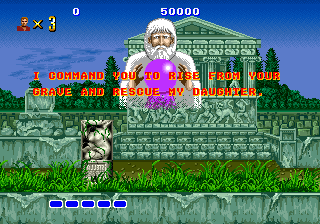
...that was one hell of a prelude. ANYHOW, let's get to the meat and potatoes.
My plan for this, believe or not, was to "de-metalize" S.S.H.'s version of this song in order to bring it closer to what it might have been before teenage Senpai ran it through the metal forge. It's from 2001, and I've taken apart and rebuilt enough of his stuff from that time period to be able to tell which elements were probably part of the original song, and which were his additions. The melodies have to be faithful for sure, but the guitar solos and the repeated chorus in a higher key? That's vintage S.S.H. 101. In the end, however, the structure and pacing were so good that I didn't really change much of it, if at all. And also, let's be honest, I'm a die-hard metalhead too, so my tendencies align with his.
I didn't use my metal formula for this. I could've, and it would've sounded amazing--I've transformed many of S.S.H.'s pieces already, and it's piss-easy at this point. My intention to de-metalize The Cold Shade Of Night was an opportunity to try something different, and so I did just that. I had a chat with SilverRIFF a few weeks ago, and at some point the conversation turned to his cover of Ken's Theme from Street Fighter II. He was kind enough to share the .dmf, and in it there's a rhythm guitar patch he borrowed from Molkirill. I don't know how the Siberian Tiger did it, but if you use it on extended channel 3, it can play a note and its fifth at the same time, and it sounds fantastic. Its range is limited, but still... sometimes I wonder if Molkirill's brilliance will ever end. Of course, a different rhythm guitar means that you have to find the perfect bass for it, and I found it in Sonic The Hedgehog 1. I'm not even kidding you, it's the exact same slap bass used on Green Hill Zone. They go together perfectly.
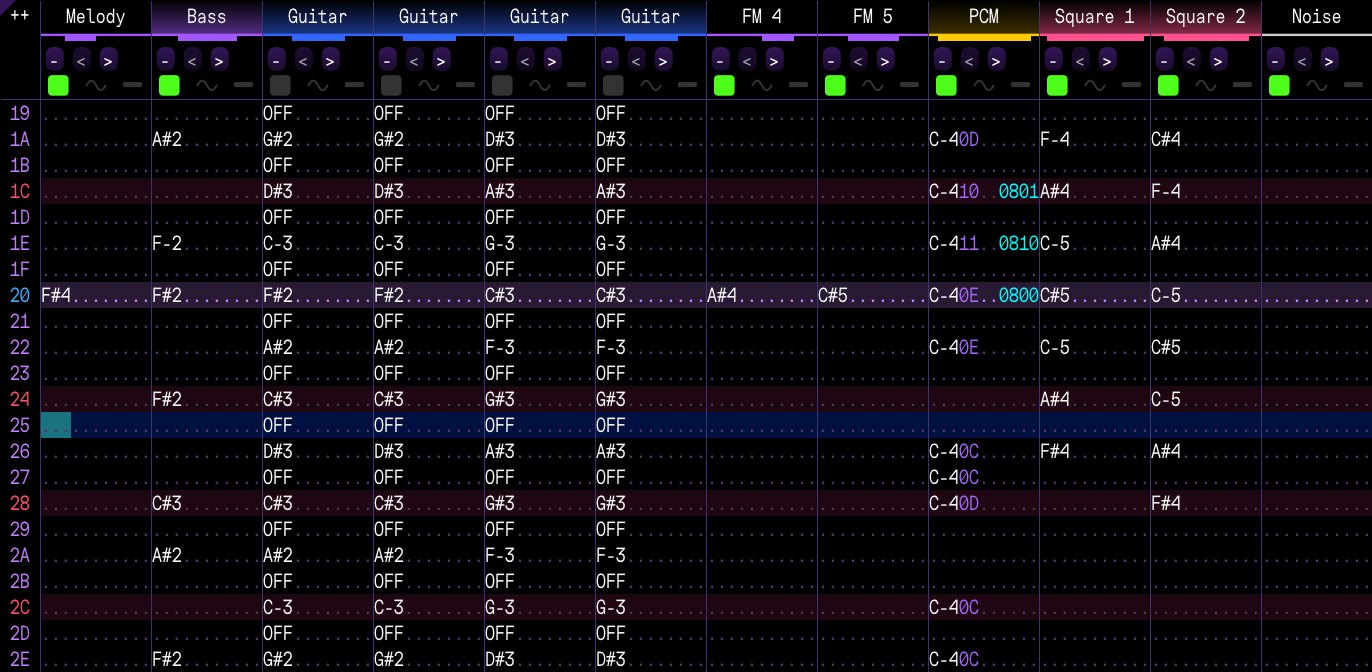
Now, when you de-emphasize the metal elements and bring the backing strings (among other things) to the forefront, you begin to see a very different piece of music emerge. Far less synth power metal, much more gothic and Castlevania-like. Another thing that contributes to that is this: when I cover S.S.H. stuff, I usually play the solos and melodies one octave lower. This reduces shrillness, and in this case, also makes them sound more serious and menacing. Also, Molkirill's rhythm guitar is meant to be played at octaves 2 and 3 and doesn't really sound very good if you step outside of that range. This forced me to modify the riffs a little, and again, by playing the notes at such low octaves, they sound darker.
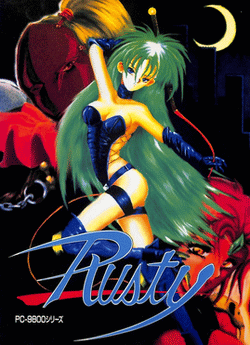
Being able to compress the rhythm guitar into a single channel means more space to try out things that are moodier, rather than just headbanging-inducing. There's a nice variety of instruments, including piano, church organ, my custom strings from Chrono Trigger's Main Theme, an excellent brass patch I also got from SilverRIFF's .dmf, my trumpet synth, another synth lead which debuted on The Metallic Maiden and which I like to call "MO's DoctorSolo", and of course my trusty Orwell Lead for the guitar solos (in the end I kept all of them). Interestingly, in order to get inspired I listened to stuff like the Rusty OST (PC-98, OPNA) and analyzed its instruments--I wanted to make The Cold Shade Of Night sound like a typical video game song from the time period which could've been on Castlevania. But it didn't work out because in order to do that, I would've had to use, well... bad instruments (at least compared to the ones I've made or borrowed). So, I pivoted to the instruments I mentioned before. FM sound design has come a long way in the past 35 years for sure.
Not being able to rely on my metal formula forced me to get creative with the stereo effects. Normally I'd pan my two rhythm guitars to each side, but this time it's just one guitar on channel FM 3 playing two notes at the same time, so all of it shares the same stereo configuration. So, I panned the strings, sometimes the echo, the main melody, whatever sounded good enough. I often ran out of space on the YM2612 for detuned echoes, so I had to use the SN76489's square waves instead. There are also some orchestra-like accented hits which I came up with, as well as more strings.
The drum samples are from the Arachno Soundfont except for the snare, which, believe or not, is from the Yamaha MU-2000--it is exactly the same one S.S.H. used back in the day, because I extracted the waveform from a clean section in one of his pieces. It was too short though, so I had to place a reversed copy of it at the end and apply a fade-out effect to make it longer. Ironically, it sounds less overpowering than other power snares I've used in the past. Again, I didn't want my take on The Cold Shade Of Night to just be balls-to-the-wall power metal like S.S.H.'s version--I wanted to bring back its moody, gothic heart into the surface while preserving Senpai's extended sections and solos. I think I was able to strike an excellent balance.
So now it's done, and I'm wondering: where are the old Japanese MIDI gods? S.S.H. has been battling severe depression for over half a decade by this point, which is rough. I have no idea where Kamino-san is, but when I did Venus Fire, I did try to send him an email--surprise, surprise: the address was utterly dead. I don't even have any information on Loki. I feel like I'm a lone historian / necromancer, digging deep into the bowels of the old internet to resurrect hidden artifacts, across countries and decades, across consoles and formats and God knows what else. The level of nerdiness on display here is off the charts, but I would have it no other way.
I can only hope one day they find this little tribute I've made to their greatness. See you around.
Back to the index