Sonic 3 & Knuckles ~ Final Boss [Metallic Mix]
for YM2612 + SN76489
by MetallicOrwell
For a chiptune artist with such a strong focus on the Mega Drive, I don't really do a lot of Sonic stuff, do I? Barely, if at all. I've made close to 70 chiptunes for the console at this point (Jesus Christ) and only three of them are Sonic music, the most recent one being my Live & Learn cover from Sonic Adventure 2, way back in November of last year. It's not necessarily for a lack of fandom; I'm still a huge fan of the classic Sonic games for the Mega Drive and Master System, as well as some guiltier pleasures, like the Adventure titles. I guess I just feel like Sonic music is overdone in chiptune, and I don't think that's unreasonable to say. Another reason might be that I've played those games so much throughout my life that their music feels less interesting to me now, since I've heard it so many times already. Ah, well, I guess it doesn't hurt from time to time, so here we go: a metal-style remix/expansion of the final boss theme from Sonic 3 & Knuckles. Let's do this.

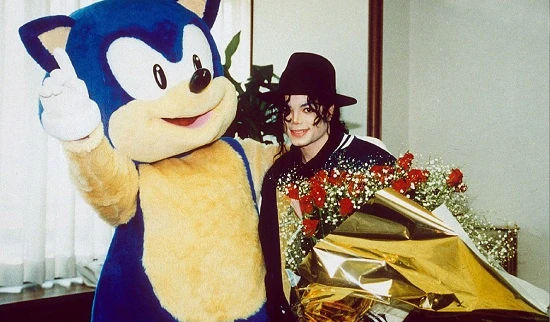
The music for Sonic 3 & Knuckles was, of course, handled by a whole bunch of people, and in most cases it's almost impossible to know which song was composed by whom. It's a giant-ass rabbit hole, and you're welcome to jump into it if you want. I do think it's really funny that apparently Michael Jackson was unsatisfied with how his initial compositions for the game sounded when played on the console, insisting that "the previous Sonic games had better music". Even the King of Pop could tell the difference between a good FM instrument and a bad one, huh? He was right, too: say what you will about the quality of the compositions, but the FM instruments themselves are often pretty mid, and not just when compared to the previous Sonic games. Also, the "memory allocation" cope is just hilarious. Even if we assume they're talking about sample quality, that's not stopping them from making better FM instruments, is it? Sonic 1 and 2 used very few samples, so Michael Jackson must have been referring to FM patch quality, even if he didn't realize that himself or didn't know how to explain it. Finally, even if they were somehow limited in the amount of FM instruments they could use (Universal Sound Bank, etc), there's no reason that the instruments they did use couldn't have been better; the parameters and values of a YM2612 FM patch are the same regardless of the type of driver used. I simply don't buy their excuses.
I remember when I did my Sky Sanctuary cover last October; I was so appalled by the quality of the original instruments that I thought even I could do better, and sure enough, I did. Now, to be completely fair to the fine folks who worked on the Sonic 3 & Knuckles soundtrack, there is a huge difference between the modern chiptune scene and the way things were like back in the day. Nowadays we have the internet, so people can share information freely and iterate on what was achieved during the console's heyday, and the tools are on a completely different level. The guys from the Sega Technical Institute would've killed to have something like the Furnace tracker, I bet. I would also imagine you were largely limited to learning from people who were physically near you, and who spoke your language. It's not like Hitoshi Sakimoto could've flown in from Japan, waltzed into their offices and taught them a lesson or two on how to make sick-ass FM patches (if Michael Jackson had heard the music from Master of Monsters he would've soiled his pants--both sides). I just felt the need to give these guys a bit of a break, because while I do think their FM instruments are pretty lousy, I also understand that they did not have the resources we have today, and most people just weren't as skilled as Sakimoto-sama. Another way to put it is this: if I had been in their shoes, I probably couldn't have done much better at the time. That's about as much leniency as I'm willing to show them, though.

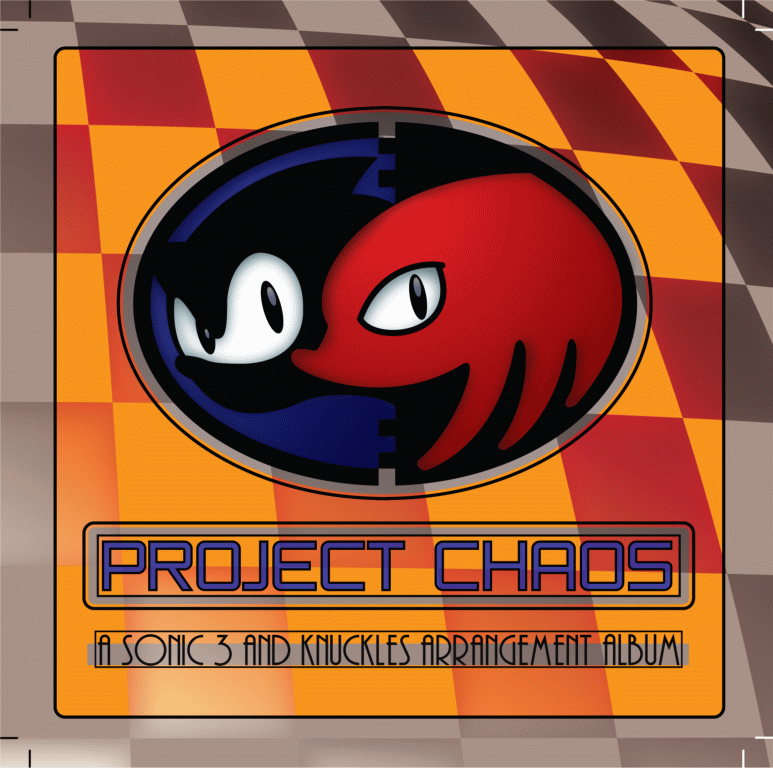
Alright, now that I got that out of my system, let's talk about my remix! It's very much inspired by the work of one SnappleMan. His contributions to music and videogames have been pretty sparse for the past 20+ years, but in 2006 he did a few tracks for a Sonic 3 & Knuckles remix album called "Project Chaos", all of them in a metal style (I like this guy). He was solely responsible for a fantastic, four minute long rendition of the final boss theme called "Malicious Fingers", and I've unashamedly borrowed some of his ideas, because they were just too good to pass up. That being said, this isn't a cover of Malicious Fingers; I've very much injected my own DNA into it, and the near minute-long section with the solos is all me.
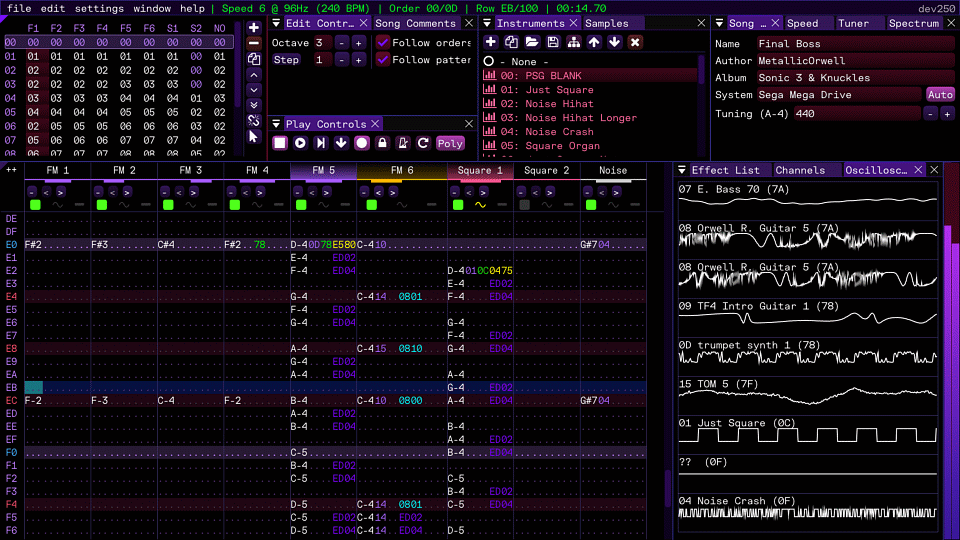
The main idea, of course, was to metalize the song, which means the intro chords with the brassy (?) instruments have been replaced by big, dumb power chords on the guitar. I actually removed some of the notes because they were taking away the focus from the thick sound of the guitar. I combined my custom Orwell R. Guitar with the synth from the intro to Thunder Force IV, which creates an enormous sound (it's probably some of the heaviest stuff ever heard on the console). I made the drums quite a bit more complex and interesting, and also the melodies in this first section are played on my trumpet synth as well as some of my lead guitar patches. There is a tempo change and a cool pitch slide using the guitar from Battle Mania Daiginjou (as well as the noise channel), and then we get into the song proper.
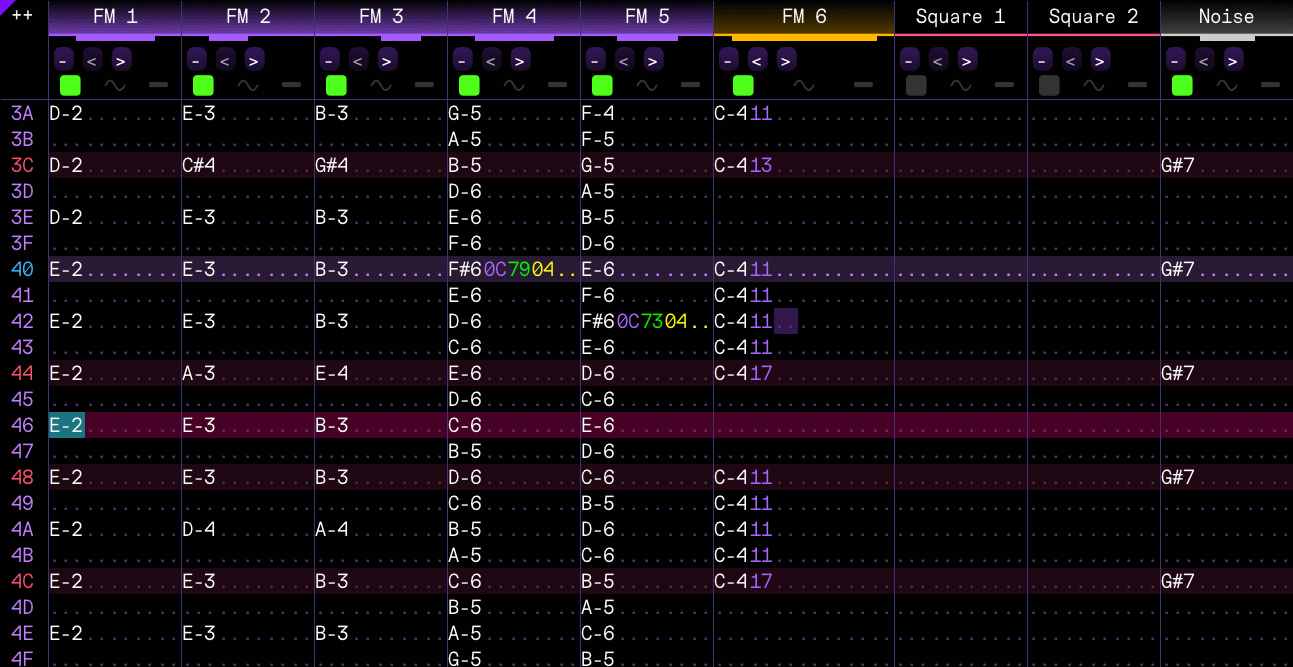
The structure has been changed a little bit. The first verse (call it section A if you like) is now extended, and the backing melody from the original song is used in place of the lead melody in the final part of the verse. So it goes like this: first part, original lead melody. Second part, the same thing, but with the rhythm guitars made more aggressive (by me). Third part, the backing melody is brought to the forefront. This is a clever technique used by SnappleMan not only to make the song longer, but also to bring attention to what was a little buried in the original. He does the same thing in the final chorus, and of course, I borrowed that too. The pre-chorus is mostly faithful to the original, and the chorus is made longer by extending the lead melody nicely.
After that, it's time for the solos. There is a transition where the bass riff becomes the guitar riff, and now the bass plays the root notes; this forms the rhythmic basis for this section. Now, if you know anything at all about your boy MetallicOrwell, then you know he's a huge Iron Maiden fan, and of course that means harmonies. After that, there is a somewhat typical "battle of the solos", where the keyboard and guitar fight for supremacy (spoiler: the guitar wins). The keyboard parts are just the melodies from the first verse run through FL Studio's arpeggiator (that sounds badass). The guitar parts are simple too: the first one is just going down the E minor scale in groups of four notes, and the second is just some basic-ass minor arpeggios. It's not very complicated, but I still think this section sounds quite exciting, and the rapid-fire kick drumming used to enhance the guitar parts works really well.
Then, I decided to add another section. It consists of a descending chord progression and a somewhat more elaborate guitar solo; the first section has a pedal point in the root note; in the second, it slows down progressively, and in the final part you get guitar harmonies again, because why would the Iron Maiden worship ever end? Next up, we get the pre-chorus again, and then the chorus. Here, instead of extending the lead melody, the backing melody is used in its place during the first section, and in the second we get the original, unmodified lead melody. After that, there is a nice, big rock ending, and the song ends.
This was an interesting experience for me, because even though S3K's final boss theme is mostly in E minor, there are a lot of dissonant notes used to create tension and menace, which obviously works. Because I'm still a novice, when composing my own parts I stuck to the standard E minor scale pretty closely, but in some of the guitar harmonies I do step out of key to match the original chords. Another thing to note is the drumming, because I didn't hold back. This kind of music begs for intense drumming, so I included lots of little changes and fills everywhere to complement the melodies and solos.

In the end, this turned out a lot shorter than SnappleMan's version, so I thought about maybe repeating some sections, but why bloat it? It works fantastically as it is. I also feel like this write-up has had more juvenile and irreverent tone than usual, but maybe that's not such a bad thing either.
See you around.
Back to the index